
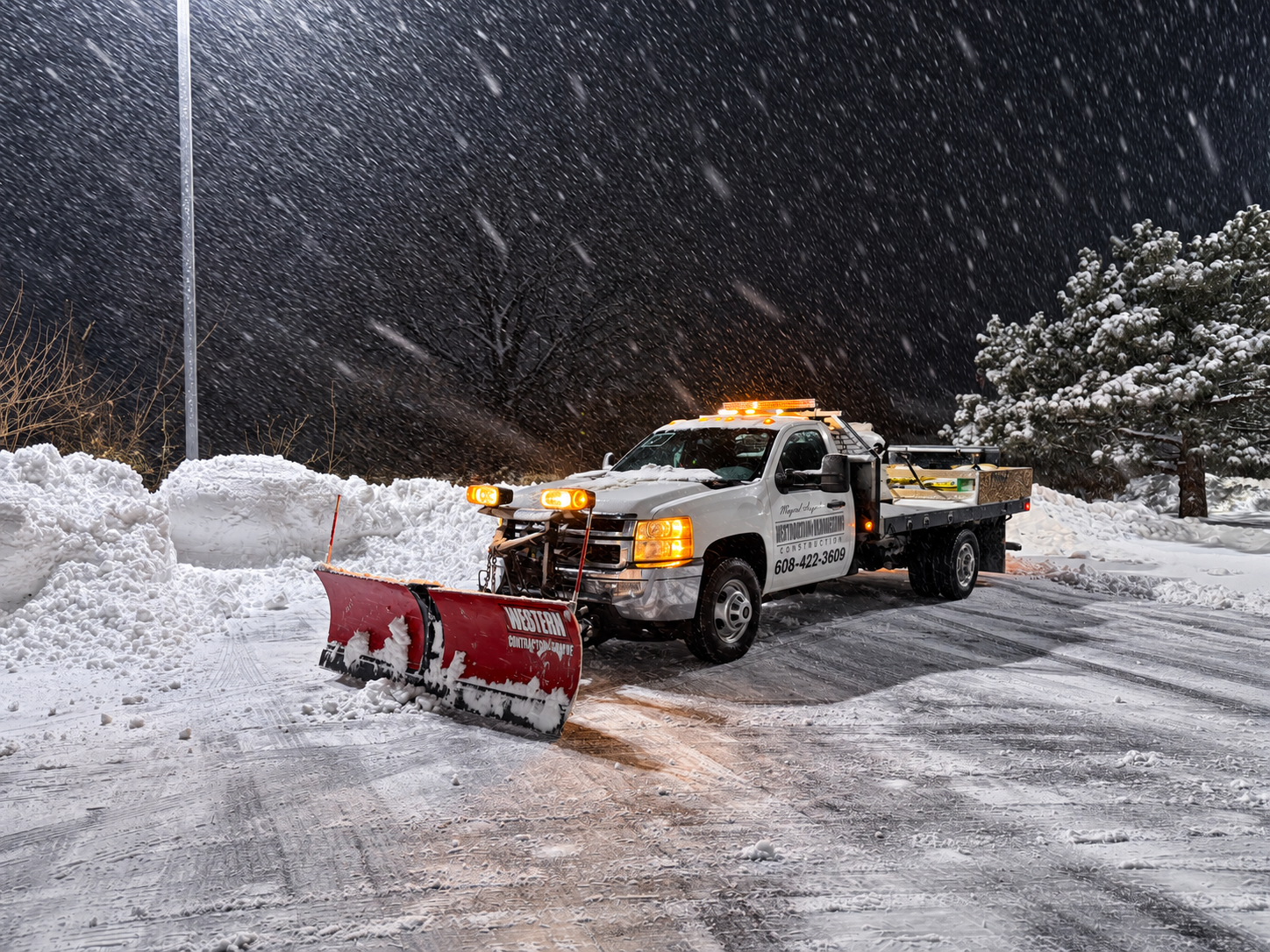
Be Ready Before The First Snowfall
DRIVEWAY & SIDEWALK SNOW REMOVAL • SALTING • SNOW HAULING
Seasonal Availability is limited. Reserve your spot early and enjoy a safer, more accesible property all winter
Featured in


WHY BOOK EARLY ?

Secure Your Place
Lock in your service before our schedule fills up


Avoid Last-Minute Searches
Skip the stress when snow hits

Safer, Clearer Access
Keep your home, family and visitors moving safely all winter
Peace of Mind
Count on a professional team with local experience
RESERVE YOUR WINTER SERVICE

CONTACT OUR TEAM
Reach out by phone or fill out the form on this page

REQUEST YOUR ESTIMATE
Tell us about property and service needs.

SECURE YOUR SPOT
Confirm your service and get on our seasonal schedule
Frequently Asked Questions
-
Our standard trigger is a 2-inch snow accumulation. We continuously monitor local Wisconsin weather patterns and dispatch our crews automatically once the snow reaches this depth, ensuring your property is cleared promptly.
-
Our residential package covers your driveway, the main public sidewalk in front of your home, and the walkway leading to your front door. Clearing additional areas like back patios, decks, or service doors can be added to your plan upon request.
-
We offer salt and ice-melt applications as an optional add-on service. You can choose to have it applied automatically after every plow, or request it on-demand when the forecast calls for freezing rain or ice storms.
-
Our crews work around the clock during winter storms. We prioritize getting you out safely, aiming to have your driveway cleared before 7:00 AM for your morning commute, followed by afternoon visits if the snow keeps falling.
-
Before the first snowfall, our team installs high-visibility fiberglass stakes along your driveway to clearly mark boundaries. In the rare event that property damage occurs, we are fully insured and will repair it come springtime.
-
We offer two flexible options: a Flat-Rate Seasonal Contract (one predictable price for the whole winter) or a Pay-Per-Plow plan. Payments can be securely automated monthly using any major credit card or bank transfer.